
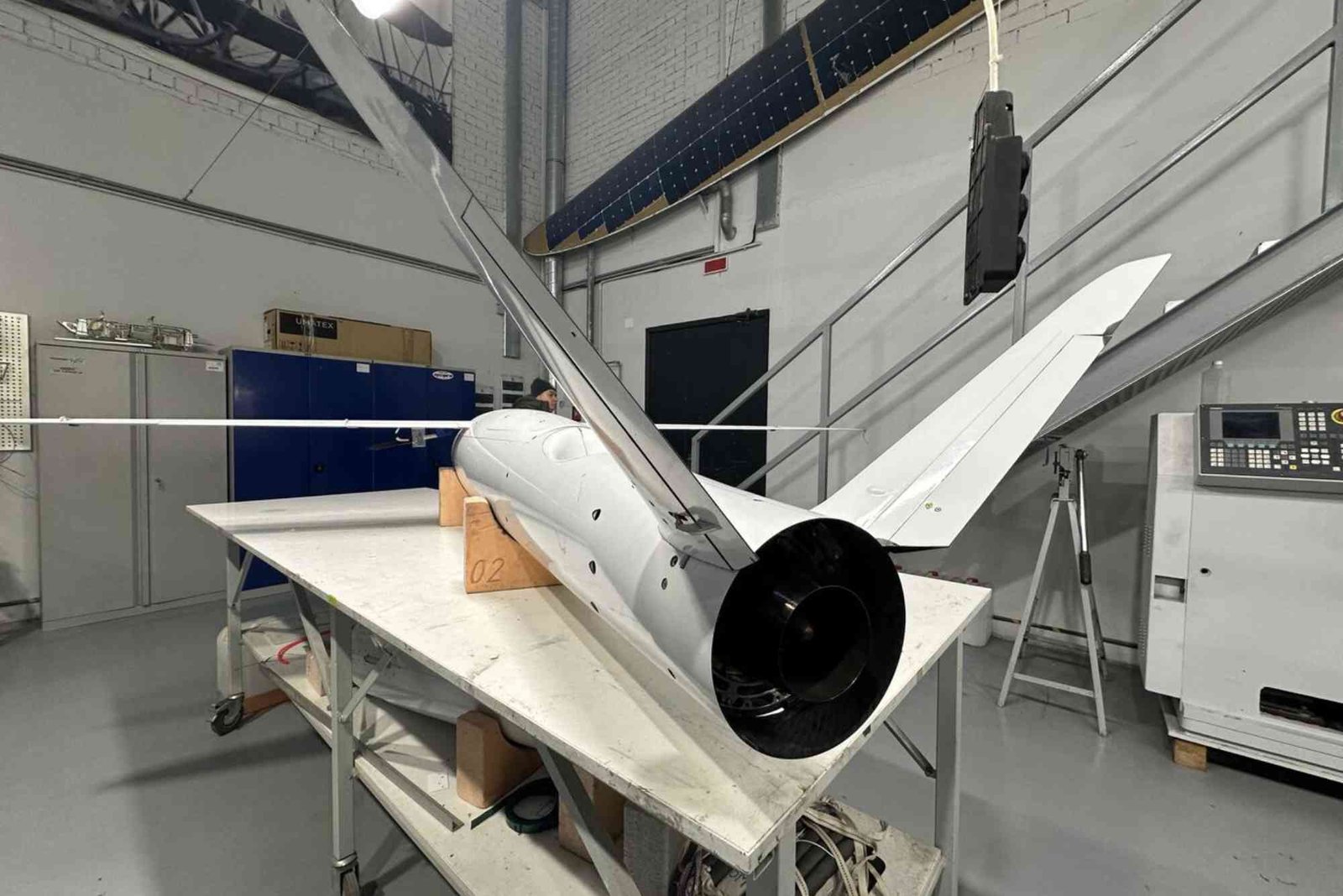
New Strike Capability Unveiled: The SHADOW 25/50 Loitering Munitions by the EDGE Group
In late October 2025, the United Arab Emirates defence conglomerate The EDGE Group showcased a new family of loitering munitions designed for precision-strike operations: the SHADOW 25 and SHADOW 50 systems, developed by its subsidiary ADASI (Advanced Defence & Aerospace Systems). With a deliberate focus on cost-effectiveness and long-range strike performance, these systems represented a notable evolution in the loitering munition market and sought to place the company firmly in the international arena.
What are loitering munitions?
Loitering munitions—sometimes termed “kamikaze drones”—occupy a hybrid niche between unmanned aerial vehicles (UAVs) and cruise missiles. They are launched, fly into a designated area, linger (“loiter”) over or near a target zone, seek or receive identification of a target, and then perform a terminal strike, essentially self-sacrificing to deliver the warhead. Their distinguishing capability lies in the combination of target search, reconnaissance, and strike in a single platform.
In operation, la munitions were either autonomous (deciding the strike once conditions were met) or human-in-the-loop (operator confirmation). Typical mission profiles ranged from pre-planned strikes on known fixed targets, to opportunistic designations of high-value targets of opportunity. Their strengths were in offering flexible, persistent presence over a target zone, rather than an immediate launch-and-hit profile typical of traditional missiles.
Technical overview: SHADOW 25 & SHADOW 50
According to the unveiling, the SHADOW 25 model carried a payload of up to 25 kg, could cruise at approximately 400 km/h and had a maximum range of roughly 295 km. The SHADOW 50 version was geared for longer endurance: it supported payloads up to 50 kg, could remain airborne for up to nine hours, and was likewise rated at approximately 295 km range. The SHADOW 25 launched from a containerised system or booster, weighed about 90 kg at maximum take-off weight, featured a wingspan of around 2.15 m and a length of 2.25 m. It achieved altitude ceilings of about 6,100 m. The SHADOW 50 version featured a wingspan of about 3.47 m, a maximum take-off weight around 125 kg, and delivered a blend of slower cruise speed (some sources cited ~167 km/h) but significantly longer on-station time due to its endurance profile.
Guidance and navigation systems integrated GNSS/INS (global navigation satellite system + inertial navigation), optical sensors, video navigation, and were reportedly capable of functioning in degraded-GNSS environments. A data link supported real-time telemetry and human operator oversight with ranges up to roughly 100 km, though actual operational link distances could vary.
In effect, the SHADOW series sought to bridge the gap between heavyweight cruise missiles and smaller loitering systems by delivering a middle ground: substantial payload, appreciable range and endurance, but at lower cost and platform complexity than piloted aircraft or high-end missile systems.

Why this launch mattered
The unveiling of the SHADOW 25/50 line marked a number of strategic and industrial shifts. First, it signalled that The EDGE Group was no longer content simply to supply regional systems, but was positioning itself to compete globally in the smart, autonomous strike weapons market. By developing a high-capability loitering munition without reliance on Western-controlled components, the company aimed to open up export markets to customers who might face technology embargoes or restrictions.
Second, from a tactical perspective, the availability of loitering systems with this combination of payload, endurance and range meant that military forces would have a new tool for precision engagement of high-value, fixed or semi-fixed targets (such as radars, vehicle depots, command posts) with comparatively low risk to human operators. In effect, the SHADOW 25/50 sought to reduce the entry cost of “smart strike” capability, making it accessible to a broader range of forces.
Third, the industrial impact in the UAE and the broader Gulf region was significant. Local development of such systems enhances sovereign defence capability, supports local employment and innovation, and helps reduce dependence on foreign-supplied technologies. The containerised launch format also emphasised flexibility for deployment—land-based, maritime or mobile platforms—expanding how such systems could be fielded.
Lastly, the contract reportedly signed with the UAE Armed Forces (approximately AED 1.33 billion, or roughly USD 370 million) validated market demand for the SHADOW series and served as a domestic anchor customer, establishing credibility for export prospects.
Operational benefits and use-cases
From an operational standpoint, loitering munitions like the SHADOW series brought several advantages:
- Persistent presence and patience: With endurance measured in hours rather than minutes, the SHADOW 50 in particular could wait on station for target emergence, enhancing flexibility and responsiveness.
- Reduced platform risk: Because the munition itself engaged the target rather than a manned aircraft, risk to personnel and high-value platforms was lowered.
- Cost-effectiveness: Compared to deploying a piloted aircraft sortie or using a high-end missile, loitering munitions offer a lower-cost strike alternative for certain mission profiles.
- Flexibility in launch and deployment: Containerised systems meant that units could be launched from a variety of platforms—land vehicles, ships, or forward bases—allowing distributed, mobile deployment.
- Enhanced surprise and reduced enemy windows: The ability to loiter meant that adversaries had smaller windows to react; targets could be struck when they presented themselves, rather than solely when pre-designated.
- High payload to target value: Especially with the 50 kg payload variant, the system could engage higher-value fixed targets, rather than only light or fleeting ones.
Typical employment scenarios included interdiction of fixed radars or vehicle depots, disruption of runway operations, suppression of air defences, or opportunistic strikes on high-value mobile assets once identified.
Limitations, risks and counter-measures
While loitering munitions offer many advantages, they also have limitations:
Electronic warfare vulnerability: Use of GNSS (satellite navigation) and data links makes the systems susceptible to jamming, spoofing or denial. Robust INS backup, optical navigation and secure links are critical.
Air-defence threat: In contested airspace with strong air defence systems (C-RAM, short-range air defence, electronic warfare), loitering munitions may be intercepted, shot down or rendered ineffective.
Legal & ethical concerns: Autonomous or semi-autonomous target engagement raises questions under international humanitarian law: proper target identification, proportionality, civilian casualty risk, and accountability. Fully autonomous strike decisions are particularly contentious.
Cost and logistics: While cheaper than some alternatives, these systems still require logistics, launch infrastructure, maintenance and operator training. If unit cost rises too high, the cost-effectiveness advantage could erode.
- Target type suitability: These platforms are best when used against fixed or high-value static/semi-static targets. Against highly mobile groups in dense urban terrain or well-defended airspace their utility may be limited.
To overcome or mitigate these risks, deploying forces must incorporate robust sensor suites, secure communications, doctrine aligned to loitering munition use, and counter-counter-counter-measures (for example operating in GPS-denied environments or using deception tools). Integration into broader force structure, including ISR (intelligence, surveillance, reconnaissance), is essential.
Competitive context and market positioning
Globally, the loitering munition market had seen major players such as Israel, Turkey and the United States expand their offerings. Systems like the Harop (Israel), Kargu/Alpagu (Turkey) or Switchblade (US) had established footprints. What differentiated the SHADOW 25/50 family was the combination of relatively long range (295 km quoted), meaningful payload (25 kg and 50 kg), and endurance (especially the nine-hour endurance of the SHADOW 50) in a cost-optimised chassis.
For The EDGE Group and ADASI, the launch underscored a strategy of leveraging local development and production to gain technological sovereignty, reduce reliance on foreign imports, and scale for export. By avoiding heavy dependence on US-controlled components, the company hoped to access customers otherwise restricted by Western arms export policy.
However, competition remained steep. Advances in embedded artificial intelligence, drone swarming architectures, stealth features, autonomous target identification and electronic warfare resilience were shaping the next generation of systems. To stay competitive, continued investment in R&D, production scale, cost reduction and global partnerships would be required.
Strategic and geopolitical implications
From a strategic vantage, the SHADOW 25/50 launch shifted the dynamics in several respects:
Regional power balance: In the Gulf region and beyond, the ability of a state to field long-endurance precision strike loitering munitions alteres deterrence calculations. Forces could maintain aerial strike capability without relying exclusively on manned assets or external suppliers.
Export diplomacy: Equipped with a domestically developed system, the UAE strengthened its defence-industrial base and opened potential export avenues — which often come with political alignment and partnership implications.
Sovereign autonomy: The local production of advanced strike systems improved defence autonomy, reducing supply-chain risk and dependence on foreign state-licensing. For buyers, this offered potentially fewer restrictions and quicker delivery.
Lowering barriers to precision strike: With a system built to be cost-effective, a broader range of actors (including smaller or mid-sized states) could access precision strike capability, altering the proliferation environment and forcing reconsideration of what “advanced” strike means.
Industrial ecosystem growth: The development process for such systems drives investment in propulsion, avionics, composites, sensor integration, autonomous algorithms, and launch infrastructure, which in turn supports wider high-tech industrial growth.
Taken together, the SHADOW 25/50 programme was more than a product launch: it represented a systemic shift in how strike capability could be built, fielded and exported in the modern autonomous-weapons era.
What must be addressed for success
Despite promising features, successful fielding of the SHADOW series demanded several critical conditions:
Technological maturity: The navigation, guidance, data-link, sensor and engine systems must be reliable in contested or degraded environments. The ability to handle GNSS denial, to autonomously identify targets with minimal error, and to function under electronic warfare stress is essential.
Cost-competitiveness: For widespread adoption, the per-unit and lifecycle cost must remain attractive. If logistics, maintenance or component cost escalate, the “low-cost strike” narrative weakens.
Training and doctrine: Forces must incorporate the system into doctrine, train operators, maintain logistics and integrate the launch and strike chain into broader command structures. Deploying a loitering munition is as much about process and support as it is about platform.
Export controls and regulation: Given ethical and legal concerns around autonomous strike systems, export markets may impose restrictions. Ensuring compliance with international norms, offering human-in-the-loop options, and maintaining transparency will matter.
Counter-measure resilience: As adversaries improve counter-drone and anti-loitering defences, the value of these munitions will depend on staying ahead of jamming, spoofing, interception and detection threats.
Scalability and production capability: To become a serious export player, The EDGE Group must scale manufacturing, manage supply-chains, maintain quality and support after-sales service internationally.
If these conditions were met, the SHADOW family could redefine how mid-sized or advanced air forces approach long-range precision strike: shifting from expensive, high-risk missions to more distributed, flexible strike options.
Buyer-perspectives: what attracts and what to watch
From a purchaser’s standpoint, several factors made the SHADOW 25/50 compelling: the relatively large payload (especially the 50-kg variant), long endurance (9-hours on the SHADOW 50), a quoted range of nearly 300 km, containerised launch flexibility, and an emerging export friendly product from a region outside the traditional Western defence manufacturing base.
However, buyers also needed to weigh several items: how mature the system was (flight tests, operational use, reliability), how much training and logistics infrastructure would be needed, what export restrictions might apply (either from the UAE or from third-party component suppliers), how the system would integrate into their existing command-and-control, sensor and launch architecture, and how resistant the system would be to adversary counter-measures in real contested environments.
In essence, adoption decisions would depend not just on the headline performance numbers, but on lifecycle cost, supportability, training burden, and operational integration.
Future outlook and potential evolution
Looking ahead, the SHADOW 25/50 launch raised several interesting possibilities for evolution:
Swarming and networked loitering munitions: Using multiple units working cooperatively would expand mission types from single-target strikes to saturation attack, distributed ISR and distributed strike missions.
Embedded AI and autonomy: Enhancing onboard processing to permit improved target recognition, autonomous loitering or decision-making under operator oversight would increase flexibility and reduce time-to-target.
Improved launch platforms and mobility: Further miniaturisation or adaptation for naval use, airborne launch, truck-mounted systems or rapid-deployment containerised launch modules would extend flexibility.
Enhanced counter-counter-measure resilience: Developing improved stealth features, hardened data-links, anti-jamming navigation and increased survivability would address emerging enemy defences.
Expanded payload options: There may be versions optimised for different warhead types (penetrating, thermobaric, fragmentation), modular payload kits or variable mission-profiles (ISR/loiter + strike).
Export-centric variants: Customised versions for export with flexibility in cost/performance trade-off, training packages, and partner integration may emerge to capture diverse international markets.
The trajectory suggested that loitering munitions were moving from niche to mainstream in strike force architecture — and actors like The EDGE Group intended to capture that transition.
Final thoughts
The unveiling of the SHADOW 25 and SHADOW 50 loitering munitions by The EDGE Group and ADASI represented a significant milestone in autonomous strike systems. By offering long-range, high-payload, long-endurance loitering munitions at a cost-sensitive point, the platform addressed a growing demand for precision strike capabilities that do not rely solely on manned aircraft or high-end missiles.
From a strategic and industrial perspective, this launch strengthened UAE’s defence-industrial base and underscored a broader shift in the global strike-weapons market: one where autonomy, distributed strike, cost-effectiveness and export-friendliness matter as much as sheer performance.
Nevertheless, successful deployment would depend not just on the hardware, but on the maturity of the system, integration into doctrine, resilience against electronic threats, cost-control, and export regulation navigation. The real test would be how the SHADOW series performed in operational deployments and whether The EDGE Group could scale its production and global reach.
For military forces seeking adaptable, lower-risk precision-strike solutions, loitering munitions like SHADOW 25/50 offered an attractive alternative — provided the buyer carefully weighed integration, support and operational context. In the evolving future of warfare, such systems may well become a staple component of strike arsenals, and the SHADOW family positioned itself to be among the frontrunners in that new class.