
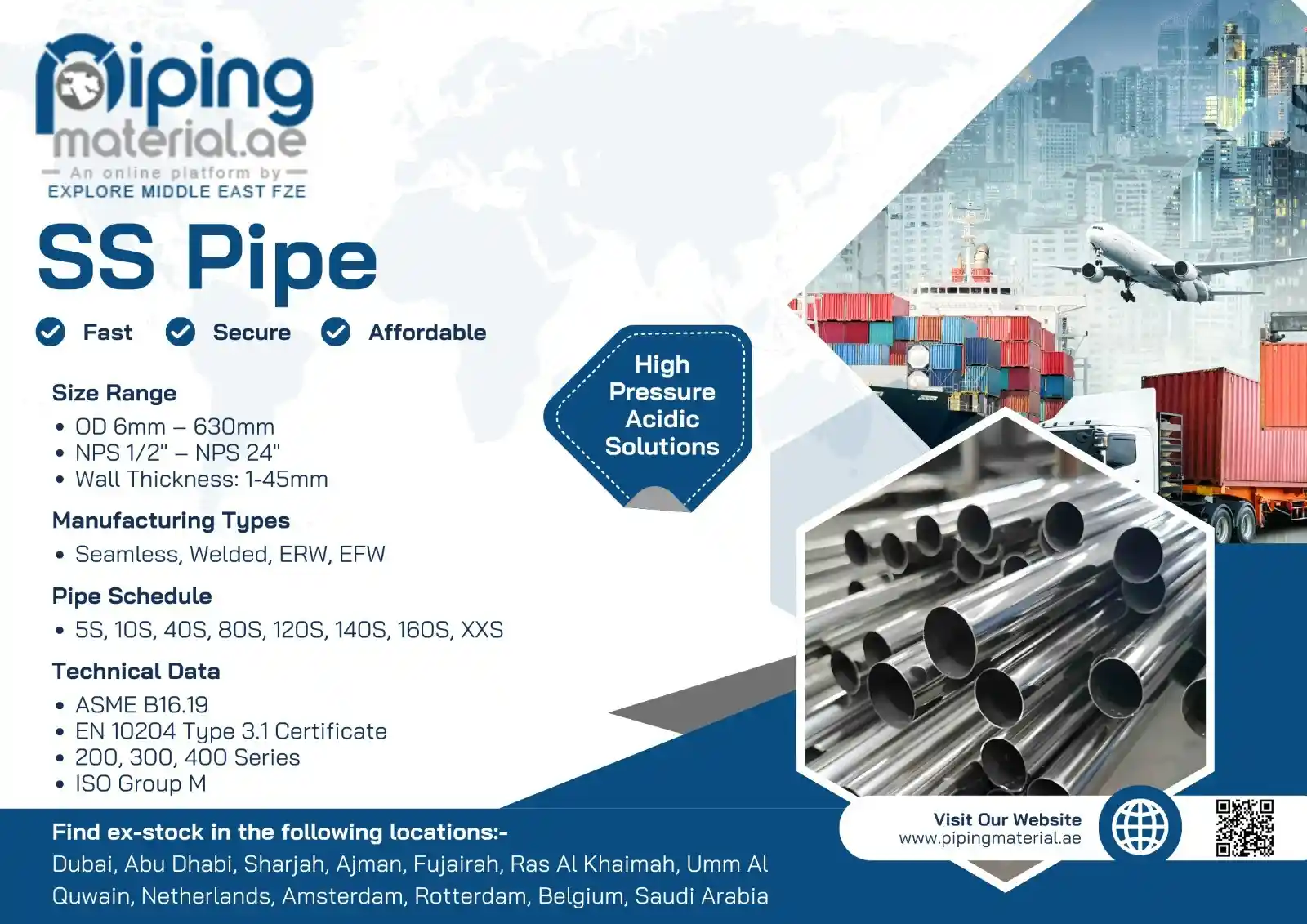
The choice of a stainless steel pipe is important when plumbing and constructing a building. The quality and service of a building or plumbing system and its ability to last and resist corrosion under challenging conditions are heavily influenced by the selection of the appropriate type of SS Pipe. There are many grades, sizes, and finishes, so the knowledge of the most important factors can help to save time, minimise maintenance, and increase safety. This guide will present you with the key points of SS Pipes and professionals that you need to use to make the right choice when buying the pipes.
Understanding Stainless Steel Pipes
Stainless steel pipes can also resist corrosion, high pressure, and extreme temperatures, making them suitable for plumbing and construction. They have a powerful structure as they are guaranteed to perform in the long term and require little maintenance. Among other materials, stainless steel offers resistance to rust, chemical reactions, and wear unlike others, and that is why it is a favorite in water distribution systems, heating, and structural frameworks.
Grades and Types of SS Pipe
The grade is the most important factor to consider when selecting an SS Pipe. The most widely used grades are 304, 316, and 321, which have individual characteristics (different properties) to be applied in various applications. Grade 304 is suitable for both general plumbing and indoor applications and has a high level of corrosion resistance as well as easy maintenance. Grade 316, which is suggested to have added molybdenum, is ideal in outdoor, marine, or environments that are subjected to chemicals since they are more resistant to chloride corrosion. Grade 321 is applied to high-temperature applications, and it is usually found in industrial building construction projects.
Other than grades, SS Pipes are of different types depending on the process of manufacture. Seamless pipes are very strong and are suitable for high-pressure plumbing. Welded pipes are cheap and can be used in normal construction requirements. The knowledge of the distinction will be the correct selection of the project, depending on the needs of the project.
Key Considerations for Plumbing
Plumbing systems need pipes that are able to withstand pressure as well as resist corrosion in the long run. An ideal SS Pipe is one that has smooth internal surfaces, so that it can not be scaled and the water flow is kept the same. Moreover, it is important to take into account the thickness of the walls; the thicker the walls, the more pressure the pipes can withstand and the less the probability of leaking. Another factor to consider in the selection is water quality, because some grades thrive better in chemically treated or mineral-enriched water. SS Pipes provide a long-lasting, hygienic plumbing system that reduces maintenance costs.
Applications in Construction
Stainless steel pipes are used in construction for structural and functional purposes. They are usually applicable in structures, handrails, aids, and HVAC systems. The SS Pipes are strong and flexible, enabling the architects and engineers to come up with strong structures that will endure the effects of high loads and the environment. Their resistance to corrosion guarantees them long life, particularly in those areas that are subject to moisture, pollution, or coastal environments. Moreover, SS Pipes may also be used to augment aesthetic needs, providing a sophisticated modern look to the visible installations.

Comparing SS Pipe with Other Materials
Plumbing and construction often use materials such as PVC, copper, and carbon steel. In comparison, SS Pipes stand out for their unmatched durability and wide range of applications. Stainless steel has high temperature and pressure tolerance as opposed to PVC. It is stronger and more resistant to corrosion, especially in harsh conditions, compared to copper. Carbon steel can be tough, but it easily rusts, and this can weaken the plumbing and the structure. Investment in SS Pipes lowers costs in the long run, improves safety, and fulfils building codes and industry standards.
Finishing and Surface Options
Stainless steel pipes are designed to influence both aesthetics and functionality. Smooth finishes are ideal for visible installations such as handrails and building elements, as they look sleek and are easy to clean. In industries, matte or brushed finishes are more desirable to minimize glare and conceal scratches. Proper choice of surface finish not only enhances aesthetic appeal but also adds durability and functionality to the pipe in a particular environment.
Maintenance and Longevity
Among the benefits of using SS Pipe would be low maintenance. Periodic cleaning with mild detergents removes surface stains, while the material’s corrosion resistance eliminates the need to apply a protective coating or replace the item at regular intervals. Also, SS Pipes are able to maintain the structural integrity for a decade or more despite harsh environments. This is due to the fact that they are durable, thus making them a good long-term investment in plumbing and construction work, which helps save on labor costs and material costs in the long run.
Integration with Other Stainless Steel Products
SS Pipes complement the other stainless steel parts. Pairing them with SS Sheet for cladding, ducting, or protective panels enhances the overall strength and aesthetic appeal of a construction project. Complementary stainless steel material helps ensure consistency in corrosion resistance and makes the installation easier to maintain. It also provides a uniform, professional look to both interior and exterior applications. This combination method is particularly effective for commercial and industrial projects where both performance and appearance are important.
Sustainability and Environmental Benefits
Choosing stainless steel contributes to environmentally responsible construction. SS Pipes can be recycled in full and have a long lifespan, thereby eliminating the need for replacement. These pipes reduce material waste and energy use by shortening maintenance and replacement cycles. This sustainability component is gaining significance as green building, and LEED certifications are becoming increasingly prevalent in contemporary construction projects.
Cost Considerations
Although SS Pipes may cost more at the start of the installation than PVC or carbon steel, the long-term advantages will justify the investment. Maintenance will be lower, the product’s life will be prolonged, and it will be more resistant to corrosion, reducing expenses in the long term. Besides, SS Pipes creates value in the value of the property by having end-lasting plumbing systems and structures that need minimal repairs over time. The comparison of costs and savings in the long run will assist in making a decision that is financially viable.
Expert Tips for Selection
Suppliers or engineers must be consulted before buying an SS Pipe to decide on the appropriate grade, size, and wall thickness to be used in the project. Take into account environmental, water quality, and load requirements. Make sure that it is properly installed with compatible fittings and connectors to ensure system integrity. When SS Pipes are invested in through reputable sources, it will guarantee as much as possible regarding performance, as well as minimize possible problems in the future.
In a Nutshell,
When selecting the perfect SS Pipe for plumbing or construction projects, several factors must be considered. These include the grade and type, the thickness, and the finishing, all of which require careful evaluation. The right choice is a guarantee of the stability of the choice, anti-corrosion, and high-performance over time. SS Pipes have exceptional efficiency and durability, whether one is planning a plumbing system for a residential or commercial building. It is an excellent project to use the highest quality materials to save more money on future repairs by selecting the best SS Pipe. For more information and high-quality options, explore our collection of SS Pipe and SS Sheet for all construction and plumbing needs.
Looking for exciting experiences and activities in the UAE? Discover the best things to do, from adventure sports to cultural tours, all in one place. Explore more on UAE activities and experiences by visiting our homepage for the latest updates and guides.
Related Reading: Top 5 Football Shoes in the UAE to Own the Pitch
Related Reading: What Makes Abu Dhabi's Central Commercial Areas Ideal for Office Spaces
Related Reading: الركيزة المادية: لماذا يُعدّ التراث المرتبط بالأرض المؤشّر النهائي للثقة عبر الإنترنت؟ — full guide
Related Reading: New Strike Capability Unveiled: The SHADOW 25/50 Loitering Munitions by the EDGE Group — full guide
Related Reading: Noticias sobre el mercado inmobiliario de Dubái en 2026 — full guide
Related Reading: عروض شهر رمضان: خصومات مذهلة على منتجات هواوي في السعودية — full guide
Related Reading: هاتف HUAWEI Mate 80 Pro: قفزة تقنية تجمع الكمال والأداء بلا حدود