
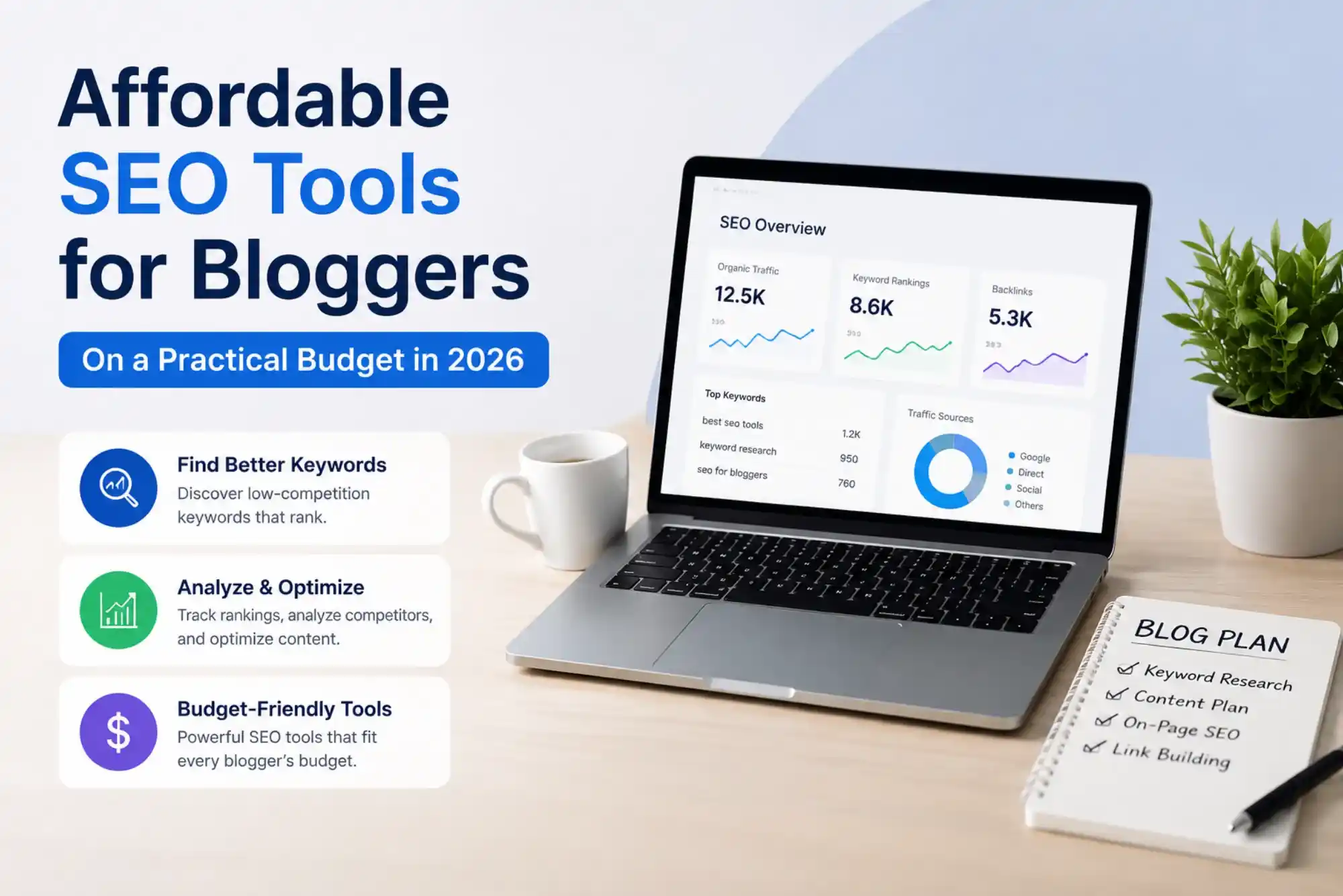
Blogging in 2026 looks very different from what it did only a few years ago. Search engines have become smarter, competition has intensified across almost every niche, and content creators are now expected to deliver quality, authority, speed, and consistency all at once. For independent bloggers and small publishers, that pressure can feel expensive.
The challenge is no longer whether SEO matters. It absolutely does. The real question is whether bloggers can compete without spending hundreds of dollars every month on enterprise software.
Fortunately, the answer is yes.
Some of the most effective SEO workflows today are being built around affordable, focused tools rather than bloated all-in-one platforms. Bloggers who understand how to combine practical research tools, lightweight optimization software, and strategic publishing habits are finding sustainable growth without overstretching their budgets.
As digital publishing continues to evolve alongside smarter online ecosystems — similar to how businesses are adapting through smart digital transformation strategies — bloggers are also learning that efficiency often outperforms excessive spending.
Why Expensive SEO Platforms Are Losing Their Advantage
For years, premium SEO suites dominated the conversation. They promised complete keyword databases, competitor tracking, technical audits, and backlink intelligence in one dashboard. While those platforms remain useful for agencies and large-scale operations, many solo bloggers simply do not need every feature they offer.

In reality, most successful bloggers repeatedly rely on only a handful of functions:
- Keyword discovery
- Search intent analysis
- Basic technical SEO checks
- Content optimization
- Performance tracking
Paying for dozens of unused enterprise features often creates unnecessary financial pressure, especially for newer websites still building traffic and monetization.
The modern SEO landscape rewards precision over software overload. Bloggers who choose practical tools with focused capabilities can often work faster and more effectively than users buried inside complicated enterprise dashboards.
Google Search Console Remains the Most Underrated SEO Asset
Before spending money on any SEO software, bloggers should fully understand the value of Google Search Console. Despite being free, it remains one of the most powerful sources of SEO data available.
Search Console provides direct insight into how Google sees a website. Bloggers can identify ranking keywords, discover pages gaining impressions, monitor indexing issues, and analyze click-through rates without relying on third-party estimates.
One of the smartest strategies in 2026 involves using Search Console as the foundation of an SEO workflow and supplementing it with affordable specialized tools instead of expensive all-in-one subscriptions.
For bloggers operating on limited budgets, this approach dramatically improves efficiency while keeping costs predictable.
Low-Cost Keyword Research Tools Are Becoming Smarter
Keyword research used to revolve around massive databases and endless spreadsheets. Today, affordable tools are leveraging AI-assisted search pattern analysis to provide cleaner, more practical insights for content creators.
Tools like Keysearch, LowFruits, and Ubersuggest have become popular among bloggers because they focus on achievable opportunities instead of overwhelming users with excessive data.
What makes these tools particularly valuable is their emphasis on realistic ranking potential. Rather than pushing broad high-volume phrases, they help bloggers uncover:
- Long-tail search opportunities
- Low-competition informational queries
- Question-based searches
- Emerging niche topics
For newer blogs, these opportunities often generate faster traffic growth than targeting highly competitive keywords dominated by major publishers.
This shift reflects a larger publishing trend seen across digital industries. Specialized positioning frequently performs better than broad visibility campaigns, much like businesses focusing on niche branding through services such as custom ecommerce and digital identity development.
Content Optimization Tools No Longer Need Enterprise Pricing
One of the biggest myths in SEO is that effective on-page optimization requires expensive AI writing platforms.
In reality, many affordable optimization tools now provide excellent guidance without replacing authentic human writing. Bloggers increasingly prefer lightweight optimization assistants that improve structure, semantic relevance, and readability while preserving editorial voice.
Platforms such as NeuronWriter, WriterZen, and Frase have become attractive options because they focus on practical content scoring rather than robotic content generation.
The strongest blogs in 2026 are not winning because they publish machine-generated articles at scale. They succeed because they combine human insight with smart optimization support.
Search engines are becoming increasingly effective at recognizing authentic expertise, topical depth, and useful information. Bloggers who rely entirely on automated writing systems often struggle to maintain long-term rankings.
Technical SEO Has Become More Accessible
Technical SEO once felt intimidating for non-developers. Fortunately, modern tools have simplified much of the process.
Affordable platforms like Screaming Frog’s free version, SiteLint, and Ahrefs Webmaster Tools now allow bloggers to identify major technical problems without needing advanced engineering knowledge.
These tools can quickly reveal:
Broken links, slow-loading pages, duplicate metadata, crawl issues, oversized images, and indexing errors that may quietly reduce organic visibility.
In many cases, fixing a few technical weaknesses can generate stronger ranking improvements than publishing additional articles.
This is particularly important as Google continues emphasizing page experience and site quality signals through initiatives documented on the official Google SEO Starter Guide.
The Rise of Affordable AI-Assisted SEO Workflows
AI is reshaping blogging, but not necessarily in the way many expected.
Instead of replacing writers, affordable AI tools are increasingly being used to accelerate research, improve organization, and streamline optimization tasks.
Smart bloggers now use AI selectively:
They generate headline variations, organize article outlines, identify semantic gaps, summarize research sources, and refine readability — while still producing original editorial content themselves.
This balanced workflow reduces production time without sacrificing quality.
Importantly, search engines are rewarding useful content rather than blindly penalizing AI-assisted workflows. The distinction lies in value. Thin, repetitive articles continue to struggle, while insightful and genuinely helpful content performs well regardless of the tools involved in the drafting process.
Backlink Tools Are Becoming More Budget Friendly
Backlink analysis used to require premium subscriptions costing hundreds of dollars monthly. Today, bloggers have far more flexible options.
Affordable backlink tools like Mangools and SE Ranking offer practical monitoring systems suitable for independent publishers. Many bloggers are also relying on free backlink visibility through Search Console combined with occasional paid analysis when needed.
More importantly, the backlink strategy itself is evolving.
In 2026, search authority is increasingly influenced by topical credibility and editorial consistency rather than aggressive link volume alone. High-quality guest posting, digital PR, and authoritative mentions now matter more than outdated mass link-building tactics.
Blogs that consistently publish useful niche content often attract organic links naturally over time.
Why Bloggers Should Prioritize Workflow Instead of Tool Quantity
One of the most common mistakes bloggers make is constantly switching between tools.
SEO software can create the illusion of productivity while actually slowing down execution. Endless dashboards, reports, and analytics often distract from the most important objective: publishing valuable content consistently.
The most efficient bloggers in 2026 tend to build simple systems.
They use one keyword research platform, one optimization assistant, one technical monitoring tool, and free analytics resources. Instead of chasing every metric, they focus on publishing useful content that directly answers audience questions.
This practical mindset is especially valuable for independent creators balancing blogging alongside freelance work, ecommerce, consulting, or other responsibilities.
Affordable SEO Does Not Mean Low Quality
There is still a widespread assumption that lower-cost tools automatically deliver weaker performance. That is no longer true.
Many affordable SEO platforms have improved dramatically over the last few years because they are built specifically for bloggers rather than agencies.
These tools prioritize usability, clarity, and actionable insights instead of overwhelming users with enterprise-level complexity.
In many cases, bloggers achieve stronger results with focused affordable software because they actually use the features consistently.
SEO success rarely comes from having the most expensive dashboard. It usually comes from understanding audience intent, maintaining publishing consistency, and optimizing intelligently over time.
The Future of Blogging SEO Is Lean and Strategic
As search algorithms continue evolving, bloggers are realizing that sustainable growth depends less on massive software budgets and more on strategic decision-making.
Affordable SEO tools are becoming increasingly sophisticated, giving smaller publishers access to capabilities that were once limited to large marketing teams.
The advantage now belongs to creators who know how to combine practical tools with strong editorial judgment.
That balance matters more than ever in 2026.
Bloggers who stay focused on audience value, efficient workflows, technical stability, and authentic expertise can compete effectively without overspending. The smartest SEO investment is no longer the biggest subscription package. It is the ability to consistently create content that deserves visibility.
For anyone searching for affordable SEO tools for bloggers, the good news is simple: meaningful growth is still achievable on a practical budget — provided the strategy behind the tools is strong.
FAQs
What is the best affordable SEO tool for beginner bloggers?
Many beginner bloggers start with Ubersuggest or Keysearch because they are easy to use, affordable, and focused on practical keyword research.
Can free SEO tools really help improve rankings?
Yes. Tools like Google Search Console and Google Analytics provide valuable insights that can significantly improve SEO performance when used correctly.
Do bloggers need expensive all-in-one SEO platforms?
Not always. Most independent bloggers only require a few core features, which affordable specialized tools can provide effectively.
Are AI SEO tools safe for blogging in 2026?
AI-assisted workflows are generally safe when used responsibly. Search engines prioritize useful, original, and high-quality content rather than purely automated material.
How many SEO tools should a blogger use?
Most bloggers benefit from using a small set of focused tools instead of managing multiple overlapping platforms.
Related Reading: Free vs Paid SEO Tools for Bloggers: Which Option Makes More Sense in 2026?