
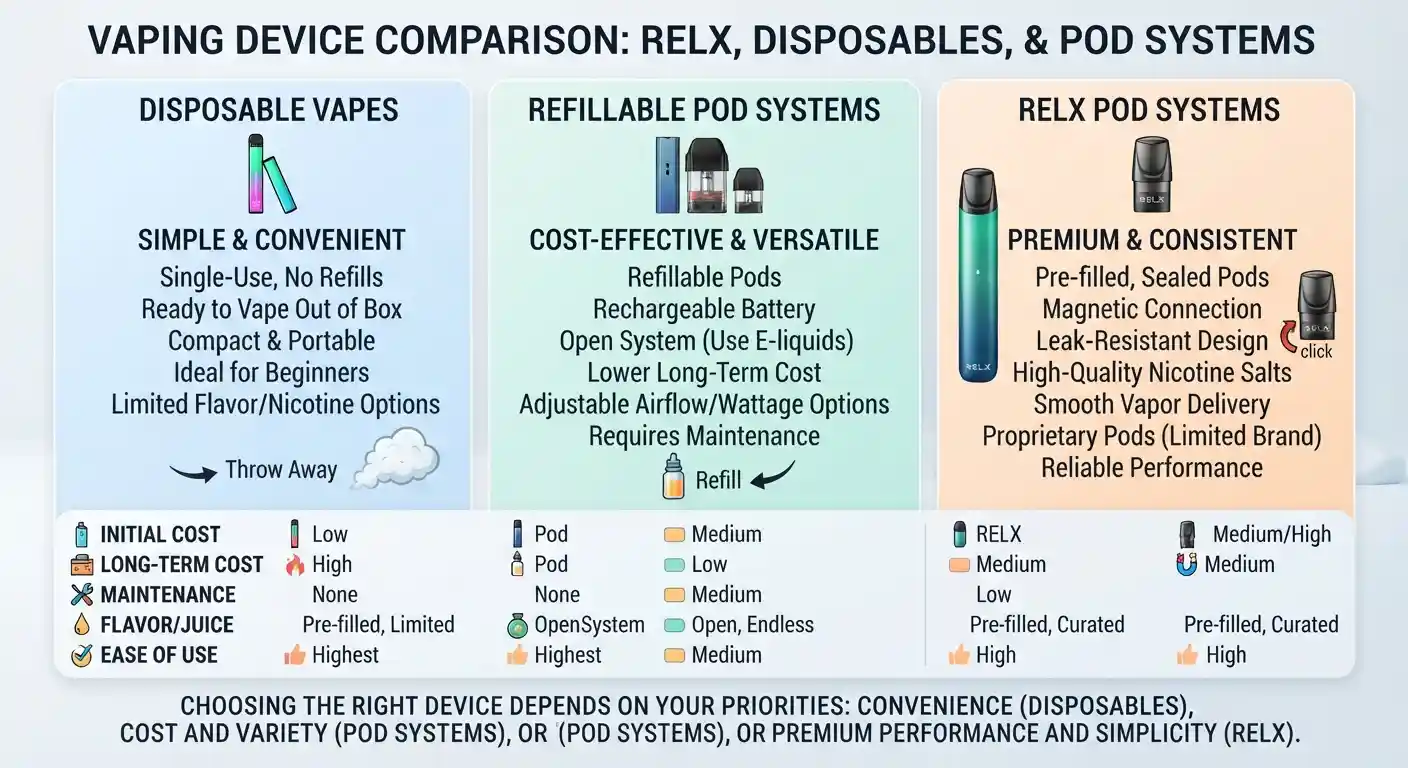
The vaping market has developed into a broad collection of electronic devices, each designed around a slightly different approach to delivering nicotine. Some products use replaceable pods, others combine all major components into a disposable unit, while more advanced systems can include additional controls and settings.
For adults researching vaping products in the UAE, these categories can sometimes appear confusing. Devices may have similar shapes and sizes even when their internal technology is different. Understanding how each system is constructed provides a better way to compare them.
The main differences involve the battery, consumable, heating system, maintenance, and intended lifespan of the device.
The Main Device Categories
Modern vaping products can generally be grouped into several broad categories.
Pod systems use a rechargeable electronic device with a separate pod. The pod may be pre-filled or refillable.
Disposable vapes combine the battery, heating element, and liquid reservoir into a single product. Their integrated design is generally intended for limited use.

Larger reusable devices can provide more advanced controls and replaceable components, although they may require greater maintenance.
These categories overlap in some ways, but they are not identical.
Understanding Pod Systems
Pod systems became popular partly because they offer a compact alternative to larger vaping equipment.
A typical pod device contains a battery and an attached cartridge. When the device is activated, the battery supplies power to a heating element inside the pod or device.
The pod contains the liquid used by the system. Depending on the model, it may be replaced after use or refilled with compatible e-liquid.
This separation between the reusable device and the consumable is one of the defining characteristics of the pod format.
Where RELX Fits Into the Category
RELX is commonly associated with compact pod-based electronic cigarette technology.
When people search for Relx Dubai, they may encounter information about pod devices, compatible cartridges, nicotine-containing products, and the broader electronic cigarette market in the UAE.
From a technical standpoint, the important point is the pod-system format. A compact pod device can be considerably different from a disposable vape even if both products have similar dimensions.
The battery remains part of the reusable device, while the pod acts as the primary consumable component.
Disposable Vapes Explained
Disposable vapes use a more integrated approach.
Instead of separating the battery and consumable into long-term components, most disposable devices contain the major operating parts within a single body.
The liquid reservoir, heating system, battery, and electronic controls are typically designed to function together until the product reaches the end of its intended lifespan.
This design can simplify the overall structure, but it also means the complete electronic device eventually becomes waste.
Why Disposable Devices Are Different
A disposable product does not generally require the same maintenance as a reusable pod system.
There is no need to maintain a separate refillable pod or replace individual coils in the same way as some larger devices.
However, the simplified design comes with trade-offs. Once the integrated product reaches the end of its usable life, it cannot simply be refreshed by installing a new pod while retaining the same battery unit.
This makes disposable products and reusable pod systems fundamentally different in terms of long-term use.
Battery and Charging
Battery design is one of the most important technical differences between vaping devices.
Reusable pod systems generally rely on rechargeable batteries. The battery can support repeated use while pods are replaced as necessary.
Disposable products may use integrated batteries designed around the expected lifespan of the device. Some modern disposable models can be recharged, but the product itself may still remain a limited-use system.
Battery capacity also affects physical size and operating duration.
Regardless of the device type, charging should always follow manufacturer instructions. Electronic devices with damaged or malfunctioning batteries should not be used.
E-Liquid and Nicotine
Most conventional pod and disposable vaping devices use e-liquid.
E-liquid may contain ingredients such as propylene glycol, vegetable glycerin, flavorings, and nicotine.
The nicotine concentration can vary significantly between products. This is important because nicotine is addictive and can lead to dependence.
A device’s design does not indicate its nicotine concentration. Consumers should check reliable product information rather than making assumptions based on size, flavor, or appearance.
Pre-Filled Versus Refillable Pods
Pod systems can be divided further into pre-filled and refillable formats.
Pre-filled pods are supplied with liquid and are normally replaced once their contents are depleted.
Refillable pods allow compatible e-liquid to be added manually. This gives users more flexibility but also creates additional handling and maintenance requirements.
The appropriate format depends on the design of the device. A pod should only be used with hardware for which it was intended.
Device Maintenance
Maintenance requirements can differ substantially.
Disposable products generally require little routine maintenance because the major components are integrated into one unit.
Reusable pod systems may require regular charging, pod replacement, cleaning, and occasional inspection.
Larger reusable devices can involve additional maintenance, particularly when they use replaceable coils, tanks, or other components.
Following manufacturer instructions is important for any device.
Environmental Impact
Electronic vaping products also create environmental concerns.
A reusable pod system allows the primary battery device to remain in service while only the consumable pod is replaced. This can reduce the amount of complete electronic hardware being discarded.
Disposable devices can generate more electronic waste because the battery and electronics are discarded together with the rest of the product.
Pods, cartridges, batteries, and other electronic components should be disposed of responsibly according to applicable local guidance.
Portability and Physical Design
One reason pod and disposable devices are often compared is their compact size.
Both categories can fit easily into a small pocket or bag. Their small dimensions are partly the result of advances in battery technology and electronic components.
However, portability should not be confused with safety.
A smaller device can still contain nicotine and an electronic battery. The health considerations associated with nicotine remain regardless of how compact the product is.
Understanding Vape Terminology in Dubai
Online searches often use broad phrases to describe the local vaping market.
Vape Dubai is one example of a term that can refer broadly to vaping products, devices, information, or services associated with Dubai.
However, a broad search phrase does not identify a particular technology. A person researching vaping should still determine whether a product is a disposable device, pod system, heated tobacco product, or another category.
Understanding terminology is therefore only the first step.
Public Use and UAE Regulations
Vaping products are subject to rules and restrictions in the UAE.
Requirements can involve age limits, sales, advertising, importing, and use in public locations. Individual venues may also establish their own restrictions.
Dubai contains a wide range of public and private spaces, and users should not assume that vaping is permitted simply because a device is electronic.
Current UAE regulations and venue-specific policies should be checked whenever there is uncertainty.
Nicotine Dependence and Responsible Decisions
The differences between pod systems and disposable vapes are mainly technological, but nicotine remains an important consideration for both.
Nicotine can create dependence, and adults who do not currently use nicotine should not begin simply because a product is compact or technologically advanced.
Those who already use nicotine should understand the concentration and ingredients of the product they are using.
Responsible decisions require looking beyond branding and considering the actual contents and risks associated with a product.
How to Compare Different Devices
When comparing pod systems and disposable vapes, several questions can provide a useful framework.
What is the consumable?
Determine whether the device uses a pre-filled pod, refillable pod, or integrated liquid reservoir.
Is the battery reusable?
Some devices use a rechargeable battery that remains with the main unit, while others are designed around a limited-use integrated system.
What maintenance is required?
A simple disposable product generally requires less maintenance than a refillable system.
How should the product be disposed of?
Electronic components and batteries require responsible disposal.
Does it contain nicotine?
This should always be confirmed from reliable product information.
Final Thoughts
RELX-style pod systems and disposable vapes represent two different approaches to modern vaping technology. Pod systems generally separate the reusable electronic device from its consumable pod, while disposable products combine most of their components into one integrated unit.
Their similarities in size and appearance can make them difficult to distinguish at first, but their battery arrangements, consumables, maintenance requirements, and waste characteristics are different.
For adults researching vaping in Dubai and across the UAE, understanding these distinctions provides a more useful foundation than focusing solely on brand names. Nicotine awareness, responsible battery handling, appropriate disposal, and compliance with current UAE regulations should also remain part of the overall picture.