
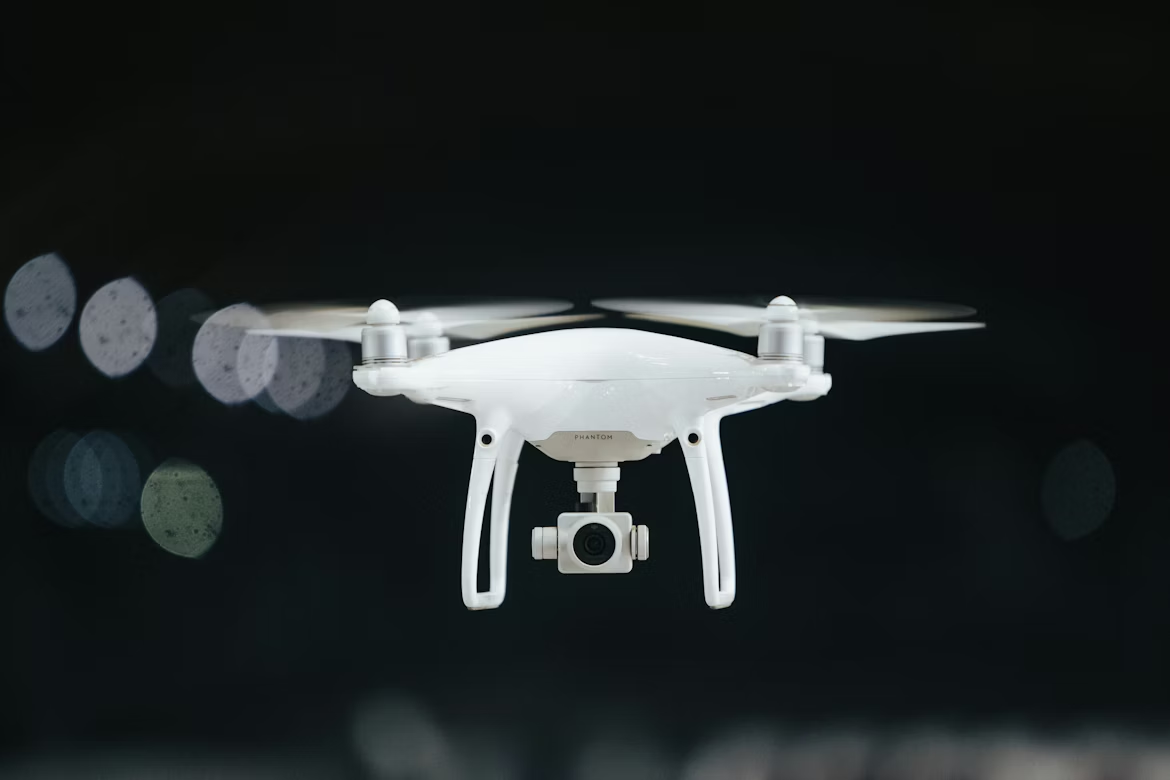
The operational landscape for unmanned aerial systems has shifted toward specialized solutions bridging manual piloting and intelligent automation. The implementation of autonomous guidance ensures mission success under extreme conditions. By combining human oversight with machine vision, these platforms achieve unprecedented reliability. This article examines the mechanics of terminal autonomy and its technical advantages in modern engineering.
The Human-Centric Model of Guided Flight
It is a common misconception that drones with terminal algorithms are fully autonomous. In reality, SkyCraft systems operate under a strictly supervised model where the human operator remains the primary decision-maker. The machine does not possess the authority to select objectives independently, ensuring tactical oversight remains with the personnel.
The standard operational workflow follows a specific sequence:
- the pilot performs takeoff and navigation toward the area of interest;
- the operator identifies potential targets via high-resolution video;
- the human selects the objective and aligns the aircraft for the approach;
- the onboard system assists with trajectory only after manual confirmation;
- the human can override the system at any moment during the terminal phase.
This synergy ensures the drone serves as a precise tool rather than an independent actor. It maintains strict operational accountability while adapting to changing conditions.
Technical Advantages of Terminal Target Lock
Terminal autonomy addresses the challenges of high speed and intense electronic countermeasures. By processing visual data locally on the aircraft, it maintains a locked path even when the connection to the pilot is lost.
Modern terminal guidance systems provide critical benefits:

- Immunity to signal loss — the drone completes its trajectory without a continuous video link.
- Compensation for pilot fatigue — the system smooths steering errors caused by stress.
- Precision against moving targets — algorithms calculate intercept paths faster than human reaction.
- Resistance to turbulence — sensors provide micro-adjustments to maintain the designated vector.
Offloading trajectory maintenance to an onboard processor allows the operator to focus on situational awareness rather than signal noise.
Comparison of Control Methods
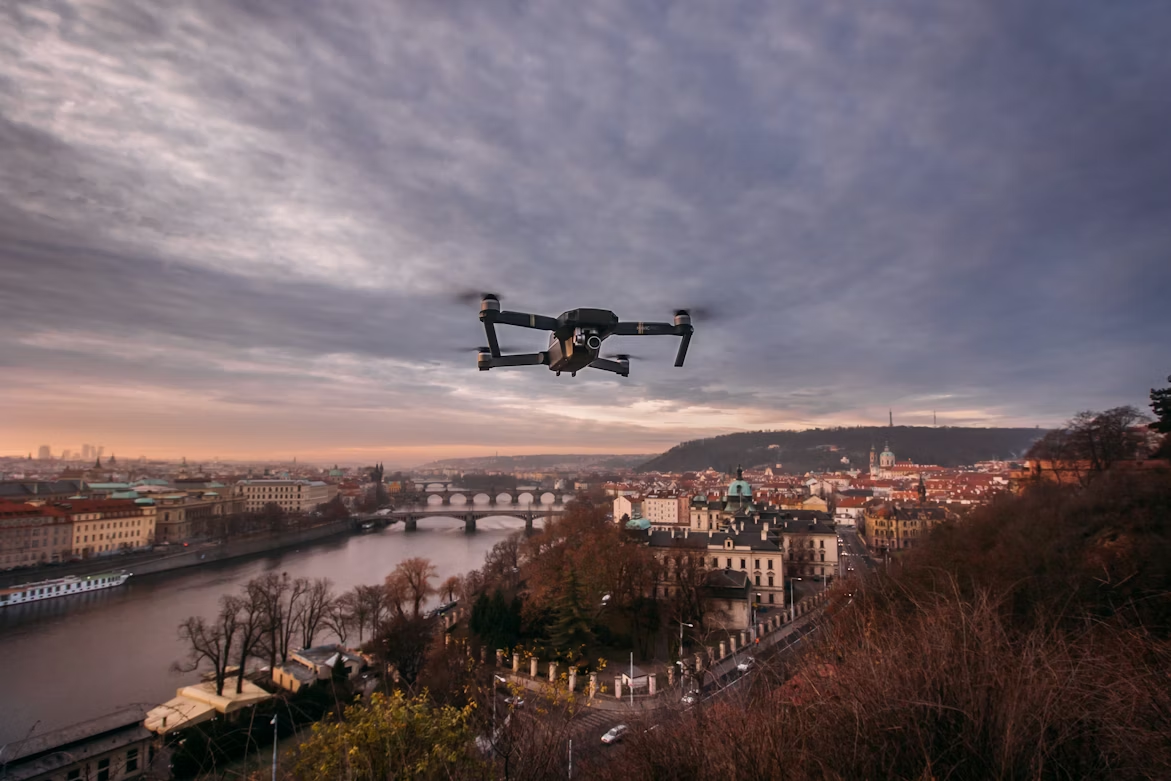
Assisted systems provide a necessary safety net for the final, most critical seconds of a mission compared to traditional manual flight.
| Feature | Standard Manual FPV | SkyCraft Assisted FPV |
| Target Accuracy | Dependent on pilot skill | Enhanced by algorithms |
| Jamming Resistance | Low — signal loss causes failure | High — localized lock |
| Moving Targets | Challenging for humans | Automated via machine vision |
The shift toward assisted flight empowers pilots with a more reliable instrument. This ensures the highest probability of mission success in contested environments.
The integration of terminal autonomy represents a logical evolution in unmanned systems. By focusing on the synergy of human control and machine-led precision, engineers have created a tool that excels where traditional methods falter. This hybrid model ensures the operator remains the soul of the mission, while technology provides the necessary accuracy. Exploring these advancements reveals a future where tactical success is no longer dependent solely on radio signal stability. The result is a resilient, ethical, and effective aerial platform for demanding modern operations.